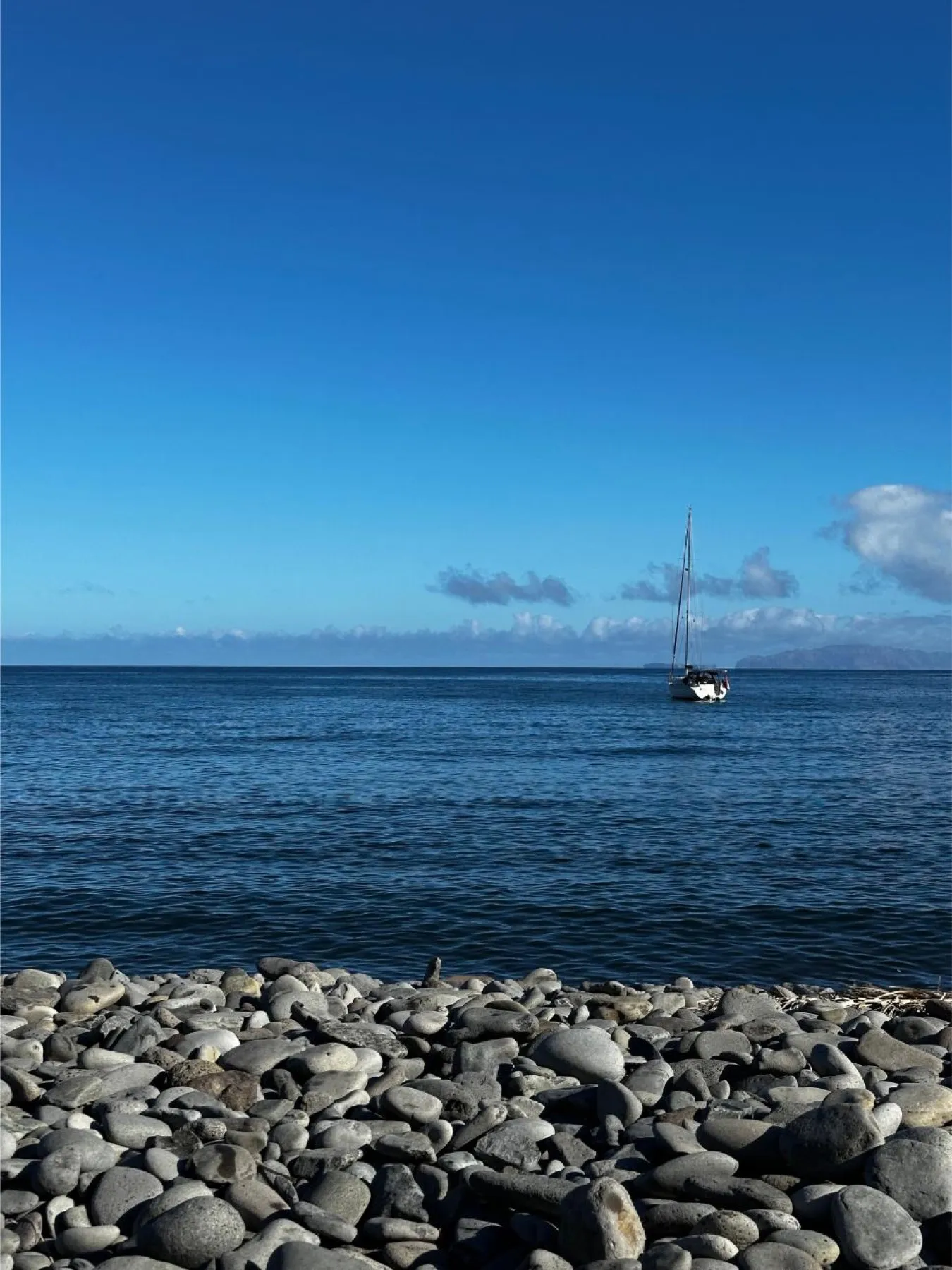
Madeira is one of Europe’s most rewarding places to look for whales and dolphins. Deep Atlantic water reaches close to the coast, so a boat trip from Funchal can take you from the marina to open ocean in a short time. Dolphins, pilot whales, sperm whales, Bryde’s whales and sea turtles may all be encountered, but they remain wild animals: no responsible operator can promise a sighting.
What makes a whale-watching trip ethical?
An ethical trip is not simply one where you see animals. It is one where the crew puts the animals’ welfare before the perfect photograph. In Madeira, marine-vertebrate watching is regulated by the regional authorities and operators need the appropriate authorisation. Look for a company that is transparent about its licence, capacity and code of conduct.
- The skipper keeps a respectful distance, approaches from behind and travels parallel to the animals rather than cutting across their path.
- The boat slows down early, avoids sudden changes of direction and gives animals a clear route to move away.
- The crew limits the number of boats around one group and leaves when the animals show avoidance, stress or a change in behaviour.
- There is a proper briefing before departure and, ideally, a marine biologist or trained naturalist on board.
- The operator never feeds, touches or chases wildlife and does not market guaranteed encounters.
Red flags when comparing boat tours
Be cautious with tours that promise guaranteed whales, advertise touching or swimming with wild animals as the main attraction, or encourage the skipper to race from one sighting to the next. Very crowded boats can also make it harder for the crew to control noise, distance and the number of vessels around a pod. A smaller group is not automatically ethical, but it makes responsible observation easier.
What is the best period to see whales and dolphins in Madeira?
The short answer is: throughout the year. Madeira Tourism describes cetacean watching as a year-round activity, and resident species such as several dolphins and pilot whales can be encountered in every season. The exact mix changes with migration, weather and sea conditions, so sightings are never guaranteed.
For the broadest choice of departures and generally calmer, brighter conditions, late spring through early autumn is a popular window. May to October is also when whale-watching pressure can be highest, so choosing a quieter departure, travelling outside peak holiday weeks and selecting a conscientious operator matters. September is a particularly pleasant compromise for many visitors: warm weather, good light and a little less summer pressure, while the ocean remains active.
- Winter: dolphins and resident species remain possible; expect more changeable weather and keep a flexible day in your itinerary.
- Spring: good conditions for a mix of resident dolphins and seasonal visitors, with fresh light and often comfortable temperatures.
- Summer: long days and frequent departures, but also more boats and more demand. Book a responsible operator rather than simply the fastest boat.
- September and October: warm, rewarding months with a good balance of daylight, sea conditions and fewer peak-season crowds.
- Every month: check the marine forecast and keep one spare day, especially if the experience is important to you.
How to make your own trip more respectful
- Choose observation over interaction: keep your hands in the boat and never call, feed or imitate the animals.
- Bring binoculars, a hat, water and a light waterproof layer instead of expecting to get close enough for a phone portrait.
- Listen to the crew immediately if they ask everyone to be quiet or to move away from one side of the boat.
- If you see a monk seal or another protected animal, keep your distance and report an unusual or distressed sighting to the local wildlife network.
- Treat a trip without a sighting as a responsible outcome when the skipper chooses not to disturb animals.
Our practical recommendation from Funchal
Book a morning or early-afternoon departure with an authorised operator that explains its welfare policy before you pay. Ask how many guests will be on board, how the crew handles several boats at one sighting and what happens when the sea is too rough. Leave room in your itinerary to reschedule rather than forcing a trip in poor conditions. From Apartment Funchal, the marina is easy to reach, so you can make the sea part of your Madeira stay without turning wildlife into a spectacle.
Where can you book a responsible tour?
These are useful starting points for comparing and booking a trip. Read the current tour description before paying: check the departure harbour, group size, authorisation, animal-welfare policy and what happens if sea conditions are poor. Lobosonda is listed by Visit Madeira as a World Cetacean Alliance certified responsible operator; VMT Madeira departs from Funchal and offers catamaran trips; Rota dos Cetáceos works with a skipper, biologist and land-based lookouts according to the official tourism listing.
A personal recommendation from our own experience: we used Magic Dolphin Celebrity, a smaller catamaran with fewer passengers. It was only slightly more expensive than the larger boats, while the calmer setting and more personal attention made the experience feel much more relaxed.
Book with Magic Dolphin Celebrity — Funchal
Book with VMT Madeira — Funchal
Book with Rota dos Cetáceos — Funchal
Read Madeira’s official marine wildlife-watching rules
See the official Madeira Tourism overview
Availability & transparent pricing
See available nights, public holidays and the applicable price level in the calendar. Every request is personally confirmed.
Check availability